


1. Introduction
The Historic Centre of Macao, as one of the oldest and largest existing architectural complexes in China that blends Eastern and Western cultures, offers a unique subject of study for exploring colonial history and culture through its continuously evolving spatial form and cultural landscape. The Historic Centre of Macao embodies the dynamic balance achieved by East Asian and European civilizations through spatial practices over four centuries. If this area is viewed as a cultural trace, its street layout, the juxtaposition of religious buildings, and the forms of residential architecture are texts reflecting the mutual permeation of Eastern and Western aesthetic concepts, power relations, and daily life. The formation of cultural traces is influenced by Macao's unique geographical location, the governance model during the colonial period, and the socio-economic structure shaped by trade. Following its 1999 return to China, this cultural landscape has entered a new phase. Its preservation is now framed within a national narrative of "One Country, Two Systems," Macao's ongoing role as a global cultural bridge within a unified China.
This article seeks to underline the political forces that have shaped Macau’s landscape, focusing on the Historic Centre of Macau and its gambling industry, and covers the Portuguese colonial authorities, the Chinese central government and the government of Macau SAR.
2. Cultural Geographical Perspective in Use
According to the theory of representation of space by Lefebvre, power holders, such as the government, would create places. (Lefebvre, 1974/1991) For example, in the case of Portuguese Macau, colonial government’s policies shaped Macau into a town of divine presence and worldly temptation at the same space. Also, the theory of spatial practice stated the actual use of space reflect the social structure and the pattern of daily life. In Macau, the gambling industry and the heritages created huge employment and routines, and numerous hotel casinos were established, generating substantial revenue for the government which affected the social structure and pattern of Macau heavily, this can clearly explain the theory.
3. Empirical Analysis
Portuguese Macau: Divine Presence and Worldly Temptation
The history of the Historic Centre of Macau can be traced back to the period of Portuguese rule. During the Portuguese colonial era, Macau’s urban area had a strong Catholic atmosphere; however, Macau’s gambling industry also began during this period. Therefore, a curious phenomenon of the coexistence of the sacred and the secular occurred in Macau.
Firstly, Macau was a town with strong Catholic atmosphere. In today’s Historic Centre of Macau, Igreja de Santo António, Igreja de Santo Agostinho and Seminário e Igreja de São José are still cultural heritage sites. As Portugal was a traditionally catholic nation, her colonial empire also centered around the Catholic Church, which could explain the many Catholic institutions present in Macau. In fact, the town itself was closely associated with missionary activities. Matteo Ricci and Robert Morrison also came to Macau to spread the Christian religion. As a result, Macau was praised as “Cidade do Santo Nome de Deus de Macau, Não Há Outra Mais Leal,” which can be translated as “City of the Holy Name of God of Macau, there is none more Loyal.” (胡鸝藻與許貝文,2023,頁68)Therefore, Macau has strong connections with Catholicism and the Christian religion, even God Himself.
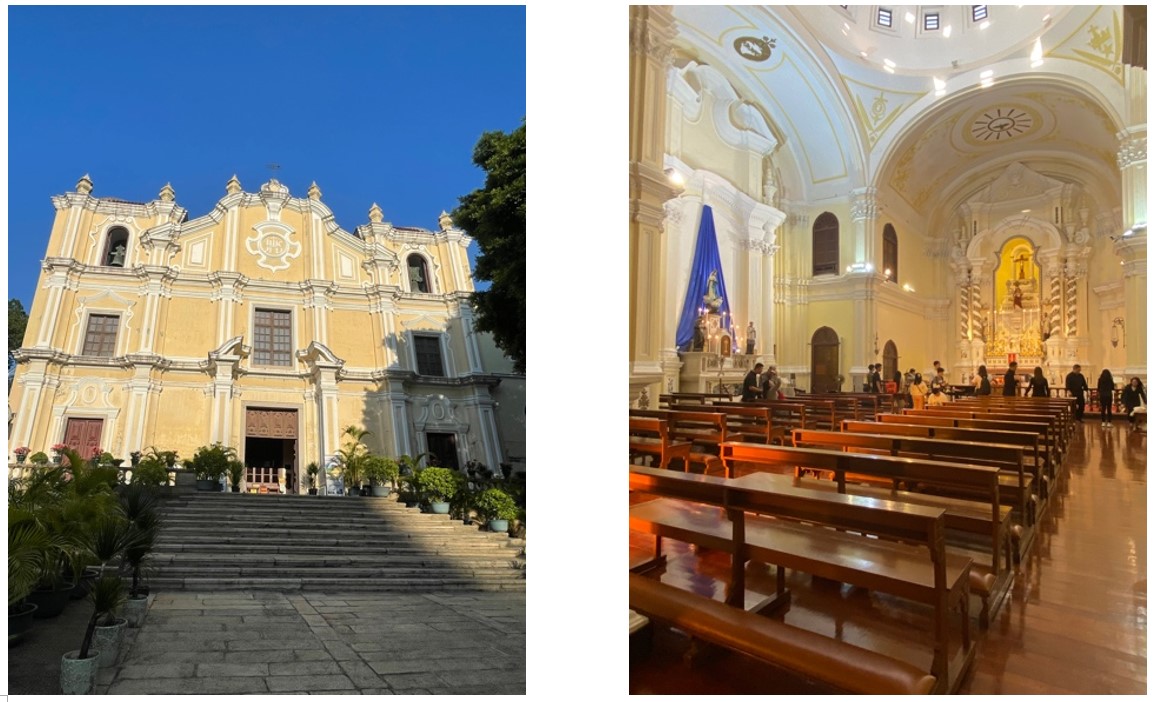
Figure 1: Seminário e Igreja de São José (Filmed by the author, 22/11)
Nevertheless, Macau is also known for its gambling industry. In 1847, the Portuguese colonial authorities legalized gambling. In 1864, the government even officially promoted and taxed the industry. These measures greatly fostered Macau’s gambling industry as well as significantly increased government revenue. In the 1870s, there were around 200 gambling houses in the town. As aforementioned, Portugal was a Catholic nation and she would have reservations about, even discourage the gambling industry. In fact, the Portuguese government herself banned gambling in 1896. However, interestingly, Macau did not follow suit and granted patent to the gambling house. The reason behind was most likely that the industry produced great revenue for the colonial government and boosted the economy. In 1911, the Portuguese governor acknowledged that without gambling industry, Macau would be in a serious crisis. From 1937, taxes from gambling house became the largest source of revenue for the colonial authorities. Moreover, in 1961, the Portuguese government decreed that Macau was a tourist site and granted special permission to the gambling industry. From that time on, gambling industry in Macau was completely legalized and acknowledged by the metropolitan Portuguese authorities.(徐永勝,2000)As a result of these historical developments, Macau became a town of worldly temptation, “The Monte Carlo of the East”.
Political forces significantly shaped the town landscape of Portuguese Macau. Portugal was a Catholic nation, and they built churches and monasteries in the town. As a result, there is a religious aura in Macau even until now. However, by the 19th century, as the colonial government’s needs for revenue grew, Macau started to develop its gambling industry, turning the town into a worldly temptation for people around the world. Therefore, political forces shaped Macau into a curious mixture of a divine and worldly town at the same time.
Chinese Communist party (CCP) in Macau: political and economic forces
In terms of heritage culture in Macau, these areas being used after handover to China. The central government has redefined Macao's cultural role, emphasizing its role as part of Chinese culture and positioning it as "an important window for the exchange and mutual learning between Chinese and Western civilizations". Beijing tried to be diminishing local characteristics. Senior cultural workers have pointed out that Macao's unique Chinese and Western cultural characteristics have not been valued or maintained since the handover of sovereignty and are being weakened. As usual, official discourse emphasizes that Chinese culture is the lifeblood of Macao and promotes Chinese culture through various cultural activities and education to counteract the cultural influence left over from the colonial period. Macau's education authorities are actively utilizing spaces in the Historic Centre to promote patriotic education. The Macau Museum, under the Cultural Affairs Bureau, has launched guided cultural tours in the Historic Centre to deepen public understanding of Macau's modern history and culture and cultivate patriotism. Nowadays, government encourage teachers to use the Historic Centre as a teaching resource to inspire their patriotism and national pride. It is clearly aimed to serve the ideology of the Chinese nation and to downplay the colonial history.
Macao SAR Government: Polices that created the appearance of two different culture
In 2001, the SAR government enacted Law No. 16/2001, which liberalized the gaming industry. It aligned with the Macau SAR government's policy direction of "establishing the tourism and gaming industry as the leading sector, with the service industry as the main body, and promoting the coordinated development of other industries. " Under the influence of this policy, Macau gradually developed its image as a "gaming city." During this period, underground industries such as prostitution and drugs also rapidly expanded, transforming Macau into a city of extravagance and decadence. Macau is a city of desires and lavish indulgence. Beneath its dazzling exterior, it is often a place that leads people astray, where one can easily find themselves trapped in dire circumstances.(自由時報 劉慶侯/特別報道 2005)
At the same time, the Macau government has also been committed to transforming Macau into a diversified leisure and tourism city. In 2005, the Historic Centre of Macau was officially inscribed on the UNESCO World Heritage List. Furthermore, in 2014, the Macau government passed the "Cultural Heritage Protection Law" to preserve historically significant buildings and sites, such as the Ruins of St. Paul's, A-Ma Temple. These cultural heritage sites embody the religious and architectural characteristics of both Eastern and Western cultures. Macau attracts numerous tourists with its streetscapes reflecting cultural integration, thereby forming the unique cultural landscape seen in Macau today.
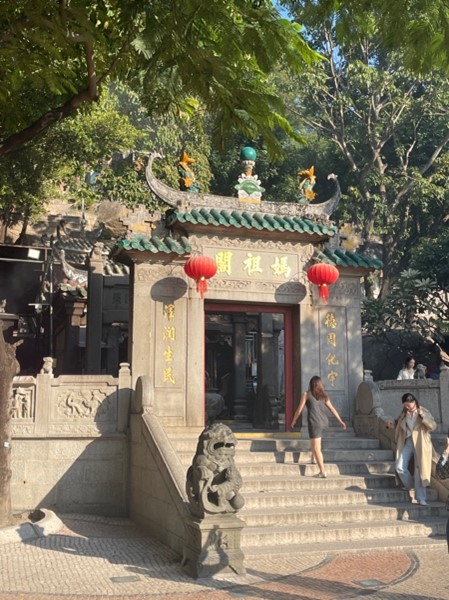
Figure 2: A-Ma Temple (Filmed by author 23/11)
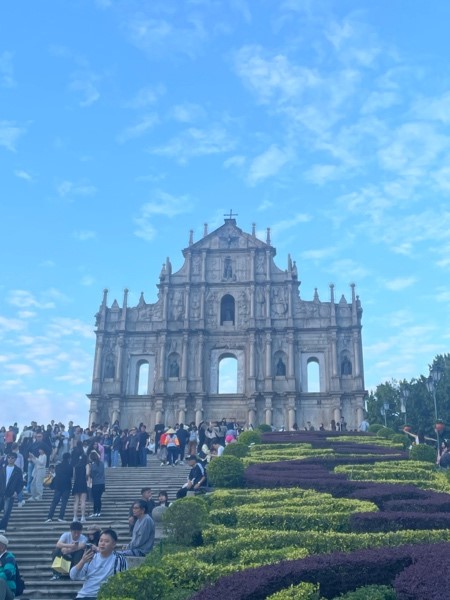
Figure 3: The Ruins of St. Paul's (Filmed by author 23/11)
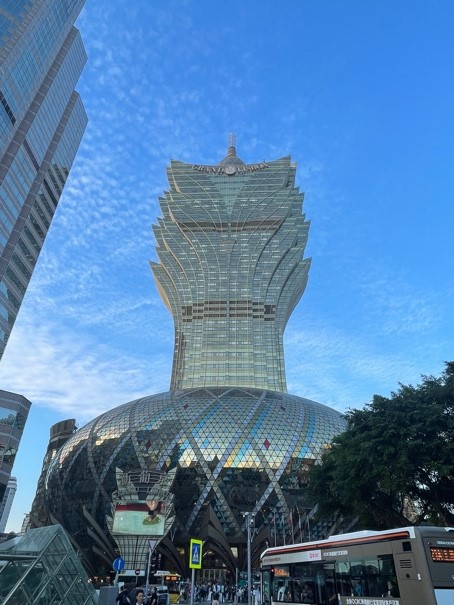
Figure 4: Casino Grand Lisboa (Filmed by author 23/11)
Macau's culture is both historical and unique, serving as a model of the fusion and interaction between Chinese and Western cultures. Cultural endeavors in Macau are primarily privately run. Its distinctive blend of Chinese and Western cultures is unparalleled worldwide(錢朝陽, 孫金灧 上海大學學報: 社會科學版, 15-20, 1999).
In recent years, as the government plans to promote diversified development, reduce dependence on the gaming industry, and build a cultural capital, the Macau government has vigorously promoted the cultural and creative industries and preserved the historic district to cultivate Macau's image as a city of diverse cultures. This shift in development direction has allowed Macau to simultaneously embody the luxury of a gaming city and the cultural ambiance of history.
4. Conclusion
This report demonstrates how a cultural geographical perspective reveals the profound links between political power, economic context, and cultural formation in Macau's urban landscape. By applying Lefebvre's theory of the "representation of space," the analysis illuminates how the dominant power holder (CCP), strategically produced a space that simultaneously embodied nationalism and worldly temptation. This was not a spontaneous cultural development but a calculated spatial strategy to reconcile Chinese identity with fiscal necessity. The resulting coexistence of churches and gambling houses is a direct cultural trace of this colonial logic. Following the 1999 return to China, this dynamic has persisted and intensified, with the gambling industry's expansion now framed within a new nationalistic context of economic contribution to the CCP. To manage this unique heritage, policy should focus on zoning regulations to protect the sanctity of religious sites from commercial encroachment and promote critical heritage education that interprets this juxtaposition not as a contradiction, but as an authentic narrative of Macau's complex historical geography. We can see how the power holder constructed a space in Macau by using urbanisation and heritage interpretation.
References
胡鸝藻與許貝文(2023)。見證澳門 : 22個故事,澳門歷史城區地標為你娓娓道來。澳門:澳門人出版有限公司
徐永勝(2000)。澳門經濟概論。澳門:澳門基金會/虛擬圖書館電子出版。https://www.macaudata.mo/macaubook/ebook006/html/index.htm
澳門博彩監察協調局。https://www.dicj.gov.mo/web/cn/history/index.html
劉慶侯 (2005年4月18日)。〈澳門,賭色的慾望城市> 。《自由時報》。取自https://news.ltn.com.tw/amp/news/society/paper/11881
澳門特別行政區政府旅遊局。https://www.macaotourism.gov.mo/zh-hant/sightseeing/macao-world-heritage
田中泓 (2025年7月27日)。〈十年立法波折重重〉。《澳門日報》。取自https://www.macaodaily.com/html/2025-07/27/content_1847454.htm
錢朝陽與孫金灧(1999)。〈不是 “沙漠” 是 “绿洲”——漫谈澳门文化〉。《上海大學學報》: 社會科學版, 15-20
Lefebvre, H. (1991). The production of space (D. N. Smith, Trans.). B. Blackwell. (Original work published 1974)
Retrieved from https://www.gov.mo/zh-hant/news/1067709/
Sheng, E. L., Zhang, A., &Yin, Y. (2023). A city profile of Macau—the rise and fall of a casino city. Cities, 140, 104431.