


1. Introduction
This project explores how Mei Ho House, the last remaining “Mark I” building was preserved and revitalized under “Partnership Scheme”. It would briefly introduce the reasons for the preservation and conversion of purpose after the revitalisation project. Some concepts from Cultural Geography would be discussed and applied to the case of Mei Ho House, trying to understand how the preservation would contribute to the preservation to the spirit of Hongkongers. We hope the case study would be the best way to comprehend the revitalisation project and thus promote the approach to another declared monument.
2. Cultural Geographical Perspective in Use
Drawing from Anderson’s framework (2021), a cultural geographical perspective investigates how places are dynamically ordered and given meaning through the ongoing composition of material and symbolic traces. The “material traces” are the tangible elements – the architecture of a building, or the functions of the place. Meanwhile, the “symbolic traces” are the intangible layers – the stories told about a place, the values it represents, the memories it holds. The coexistence between these two traces gives a place of meaning. It focuses on the interplay of power, memory, and identity in transforming a physical space into a meaningful place. This perspective examines how landscapes become culturally significant to a community where successive layers of cultural meaning are inscribed, erased, and reinterpreted through social practices and power relations.
Mei Ho House, originally constructed as an urgent response to the Shek Kip Mei fire in 1953, providing shelter for more than 50,000 refugees who once inhabited in the squatter, underwent revitalization and re-opened to public as YHA Mei Ho House Youth Hostel and Museum in 2013. This transformation actively constructs what Anderson (2021) described as “sense of place” by symbolically linking the building to cultural significance. As traces of resilience and community are reflected in times of adversity, Mei Ho House mirrors the Lion Rock Spirit (獅子山精神) and the Hong Kong identity. In Michel Foucault’s concept of power/knowledge, Mei Ho House represents “truth” as the “origin of Hong Kong public housing” and the symbol of “community spirit”. The conversion of the building into a museum and youth hostel is an act of governmentality and disciplinary technology, where the public is subtly disciplined to embrace the collective identity. This reflects Foucault’s idea of power as productive – it creates a place of public memories to foster social cohesion. In a nutshell, this project would apply the cultural geographical perspective by drawing several core concepts for its empirical analysis.
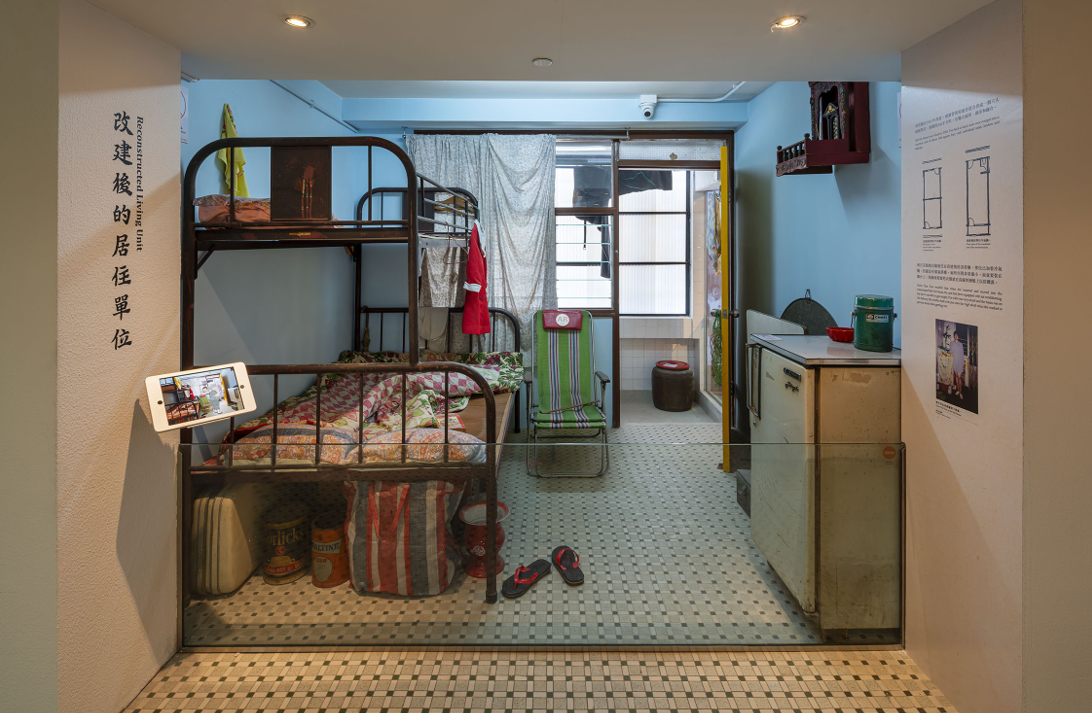
Picture 1 Demonstration of Mei Ho House flat in “Mei Ho House of Livelihood” (Time Out)
3. Empirical Analysis
Site Analysis
In 2004, Hong Kong Government has introduced a social public–private partnership named “Revitalising Historic Buildings Through Partnership Scheme”. NGOs were invited to submit proposals and become the service provider. The successful application required the service provider to engage resources on revival and maintenance work. Mei Ho House, the only remaining Mark I resettlement blocks, was the one listed on the first batch in the Scheme (Cheung & Chan, 2014).
Mei Ho House was one of the resettlement blocks after the Shek Kip Mei Fire. And the public estate building marks the origin of the Hong Kong public housing and was listed as Grade II historic buildings in Hong Kong in 2010 and proposed to revitalize the site into Youth Hostel (Antiquities and Monuments Office, 2010).
Under
the “Revitalising Historic Buildings
Through Partnership Scheme”, HKYHA tried to establish the significance and
preserve the site with new function, the association at last decide to keep the original use of it – to become a hostel,
which is like what it was.
Mei Ho House is now converted and renovated into 129 rooms for backpackers and solo travellers; the shared room would welcome everyone in the community (HKYHA, n.d.). Moreover, the Hostel remains its function from past to present: Communal place is offered for people to interact around the world. In the past, the bonding and the social connection in the community was strong. The Hostel aims to restore the tradition and the spirit of old Hong Kong.
Furthermore, part of Mei Ho House would be converted into a mini museum called “Mei Ho House of Livelihood”, aiming to promote the history and the neighborhood culture of the estate (HKYHA, 2020).
The idea of setting up the museum and preserving the building is highly related to the “The Sense of Place”, which is defined by Agnew and Duncan in 1989. The idea is that human, culture and environment are connected as network and how space becomes place (Agnew & Duncan, 2014, pp. 174–176). Mei Ho House symbolized the origin of public housing for refuges and squatter, and the sense of community: The residents pull together in times of trouble and support each other, which is the Lion Rock Spirit. The project preserved the collective memory, reminding the visitors how society and became “the witness of the housing development, a living archive of the community spirit and the history behind it, which Anderson (2021) has mentioned as a trace to ‘express collective will and collective thought’.
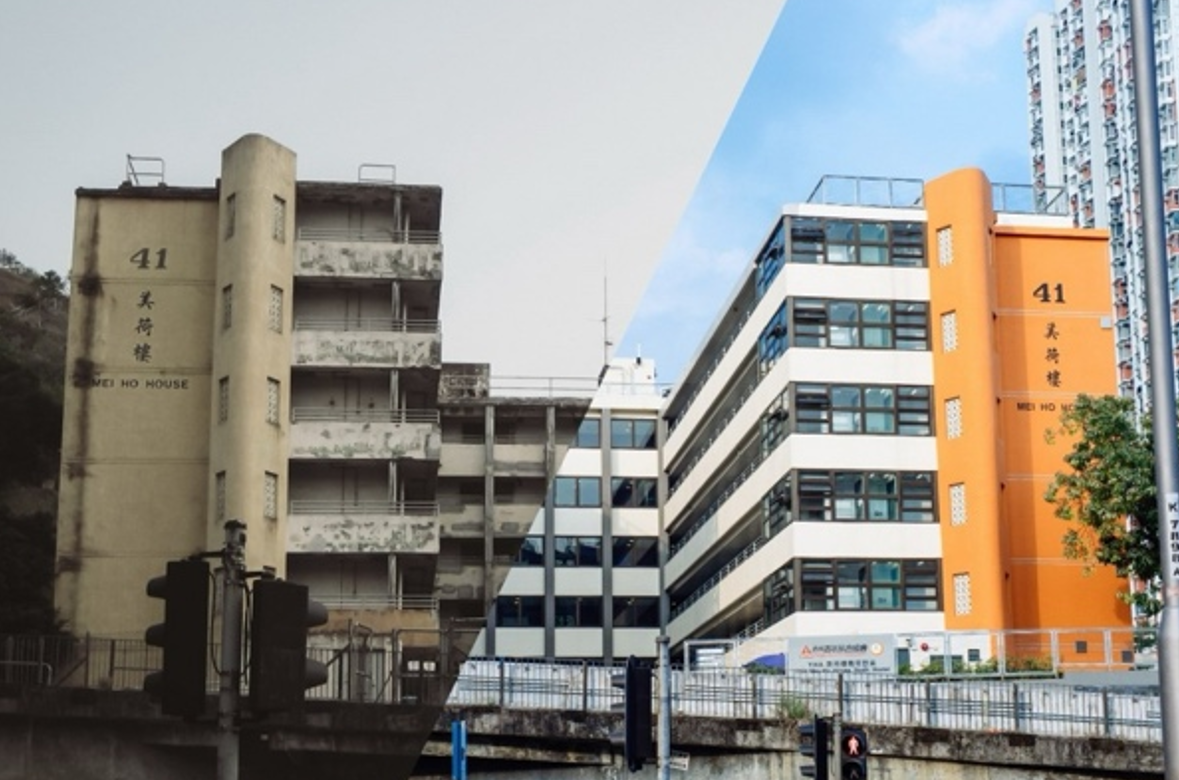
Picture 2 Mei Ho House before and after. (HKYHA)
Different Stakeholder Involved
There were different stakeholders
involved in Mei Ho House renewal, under revitalising historic buildings through
partnership scheme besides the government who mainly provided the financial
support, promoted public participation in the protection of historical
buildings, and guidelines for the project (Development Bureau, 2025), the
community and NGOs were also critical for the project.
First, the NGOs- Hong Kong Youth
Hostels Association (HKYHA) was being chosen by the Advisory Committee on
Revitalization of Historic Buildings (ACRHB) for providing service for the Mei Ho
House in 2009 (Lam et al., 2022). It also responsible for future maintenance,
engaged consultants ‘(including architects, structural engineers, building
services engineers, quantity surveyors and heritage conservation consultants)
to undertake tender assessment, contract administration and site supervision of
the project’ (Legislative Council, 2010).
Next, for the community, generally
members in Sham Shui Po District Council, Legislative Council and Antiquities
Advisory Boardon supported the projects (Legislative Council, 2010). Hong Kong
Housing Authority (n.d.) have mentioned that sustainable housing development
cannot be achieved without the participation and support of residents in our
estates and district councils. To solicit public opinion and explore how to
revitalize the building and better serve the community, the Hong Kong
Development Bureau held a competition for various professional organizations
(Hong Kong Housing Authority, n.d.).
Moreover, Chinney Construction Co. Ltd. was commissioned to transform the Mei Ho House. They preserved as many original historical elements as possible, such as metal grilles, metal doors, and kitchen countertops. Their effort for trying the best to preserve the historical value in Mei Ho House was recognized by the Chartered Institute of Building (Chinney Construction Co. Ltd., 2025).
4. ConclusionTo conclude, the “Partnership Scheme” would be the best way to preserve the building itself and the value behind it. From a cultural geographical perspective, Mei Ho House powerfully illustrates the interplay of material and symbolic traces. The preservation stands as tangible witnesses to the community, reaffirming the Lion Rock Spirit. Through subtle mechanisms of memory-making, the site reinforces a collective narrative of community and endurance. The project would be the way to explain the idea of sense of place. The renovated public estate building is the epitome of old Hong Kong, showing how they were striving in the society. Its success strongly advocates extending the “Partnership Scheme” to other monuments, ensuring that Hong Kong’s shared stories continue to resonate with present and future generations.
References
Agnew, J., & Duncan, J. (Eds.). (2014). The Power of Place (RLE Social & Cultural Geography) (pp. 174–176). Routledge. https://doi.org/10.4324/9781315848617
Anderson, J. (2021). Understanding cultural geography: Places and traces (3rd ed.). Routledge. https://doi.org/10.4324/9780367814816
Antiquities and Monuments Office. (2010). Revitalisating Historic Buildings Through Partnership Scheme Batch I Project Conservation Management Plan prepared for Heritage Impact Assessment for Adaptive Re-use of Mei Ho House as Youth Hostel Conservation Management Plan Content. https://www.amo.gov.hk/filemanager/amo/common/form/MHH-HIA.pdf
Cheung, E., & Chan, A. P. C. (2014). Revitalizing Historic Buildings through a Partnership Scheme: Innovative Form of Social Public–Private Partnership. Journal of Urban Planning and Development, 140(1), 04013005. https://doi.org/10.1061/(ASCE)UP.1943-5444.0000161
Chinney Construction Co. Ltd. (2025). PROJECTS-REVITALISATION OF ME HO HOUSE-SHEK KIP MEI. https://www.chinneyconstruction.com.hk/mei-ho-house/
Development Bureua. (2025). The Government of the Hong Kong Special Administrative Region.https://www.devb.gov.hk/filemanager/tc/content_85/Annex_3.pdf
HKYHA. (n.d.). Background Information - Mei Ho House Revitalisation Project. YHA – Hong Kong Youth Hostels Association. https://www.yha.org.hk/en/our-services/mei-ho-house-revitalisation-project/significance-and-design/
HKYHA. (2020). Heritage of Mei Ho House - YHA – Hong Kong Youth Hostels Association. YHA – Hong Kong Youth Hostels Association. https://www.yha.org.hk/en/our-services/mei-ho-house-revitalisation-project/heritage-mei-ho-house/
Hong Kong Housing Authority. (n.d.). STAKERHOLDER ENGAGEMENT. https://www.housingauthority.gov.hk/hdw/en/aboutus/publications/ehs0708/stakeholder01.html
Lam, E. W. M., Zhang, F., & Ho, J. K. C. (2022). Effectiveness and Advancements of Heritage Revitalizations on Community Planning: Case Studies in Hong Kong. Buildings, 12(8), 1065. https://doi.org/10.3390/buildings12081065
Legislative Council. (2010). 7QW–Revitalisation Scheme–Revitalisation of Mei Ho House as City Hostel. https://www.legco.gov.hk/yr0910/english/fc/pwsc/papers/p10-10e.pdf