


1. Introduction
The
presence of over 200,000 Filipino domestic helpers is a defining feature of
Hong Kong's social and urban landscape, a direct consequence of the city's
economic development and evolving family structures since the late 20th
century. While they live and work in the city, their experience is inherently
transnational, situated between the private, often isolating, sphere of their
employers' homes and their own familial roles in the Philippines. Their fixed
weekly rest days, primarily on Sundays, perform a dramatic weekly
transformation of public spaces across Hong Kong into vibrant, temporary
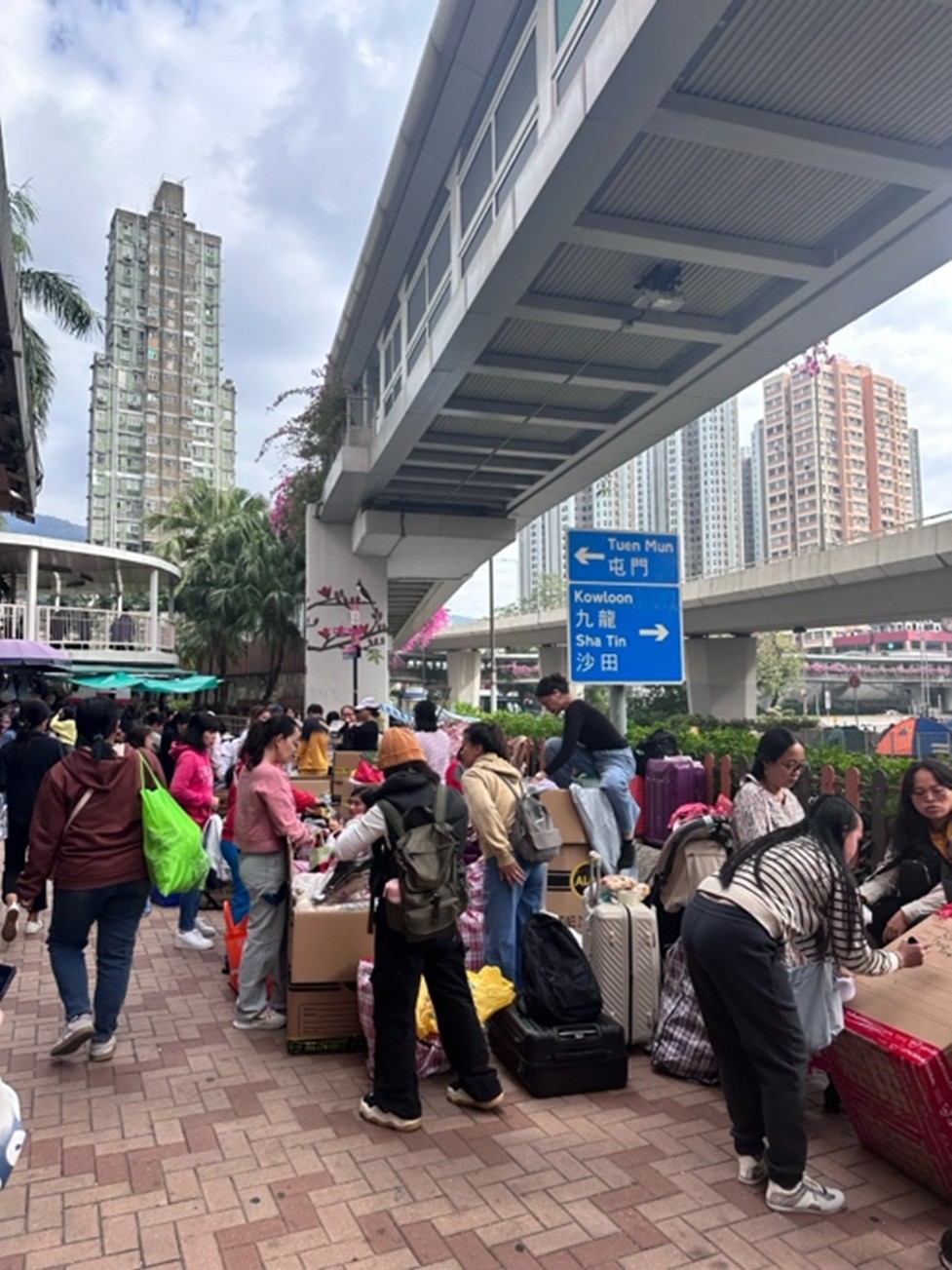
enclaves. While well-documented gatherings occur in Central's statuary squares
and under the overpasses of Mong Kok, our research focuses on a significant yet
less-studied congregation at Lik Sang Plaza in Tsuen Wan. Here, Filipino
domestic helpers do not merely socialize; they engage in a complex ecosystem of
economic and social activities, from sending meticulously packed balikbayan boxes
(literally, "repatriate boxes") to purchasing specific culinary
ingredients unavailable in mainstream markets. This paper investigates this
phenomenon through a cultural geography lens, exploring how the unique spatial
and economic layout of Lik Sang Plaza facilitates a crucial site for cultural
maintenance and how this gathering reflects an ongoing, nuanced "struggle
for place" within the host city.
Our
analysis is guided by a synthesis of theoretical concepts that illuminate the
production of social space. Michel Foucault’s heterotopia provides a powerful
starting point, describing "counter-sites" that exist within every
culture, but are "simultaneously represented, contested, and
inverted" (Foucault, 1967). These spaces are often linked to slices of
time, or "heterochronies." Lik Sang Plaza functions precisely as such
a heterotopia, particularly on Sundays. It becomes a space tied to the specific
temporal rhythm of migrant workers' rest days, where the dominant commercial
logic and social norms of Hong Kong are temporarily suspended and replaced by a
distinctly Filipino-centric economy and social order. It is a space of
illusion, exposing the reality of Hong Kong's reliance on migrant labor, and a
space of compensation, seeking to create a perfect, microcosmic version of a
Filipino community abroad.
This
transformation is further elucidated through Henri Lefebvre’s spatial triad,
which conceptualizes space as a social product composed of three elements
(Lefebvre, 1991). First, Spatial Practice (Perceived Space) refers
to the physical layout and daily use of Lik Sang Plaza—its corridors, shops,
and adjacent open areas. Second, Representations of Space (Conceived
Space) is the space as planned by architects, developers, and
authorities; a commercial plaza for retail and pedestrian flow. The Filipino
community's activities, however, generate the third element: Representational
Spaces (Lived Space). This is the space as directly lived through
its associated images and symbols, where users appropriate and redefine the
conceived environment. Through their spatial practices, the community resists
the plaza's intended use and re-inscribes it with their own cultural meanings,
creating a lived space of identity, memory, and community, thus completing a
dynamic process of spatial production.
Spatial Layout and Regional Environment: The Anatomy of a Hub
Tsuen
Wan’s urban fabric is fundamental to understanding the organic emergence of Lik
Sang Plaza as a community hub. Satellite imagery and field observation reveal a
high-density residential area characterized by a stark socio-economic diversity
of housing, from the gleaming, securitized towers of Vision City to the
weathered, densely populated tong lau (tenement buildings) in
districts like Yi Pei Square. These varied residential landscapes, whether
catering to affluent dual-income families requiring household management or
elderly and new immigrant families in need of childcare and eldercare, generate
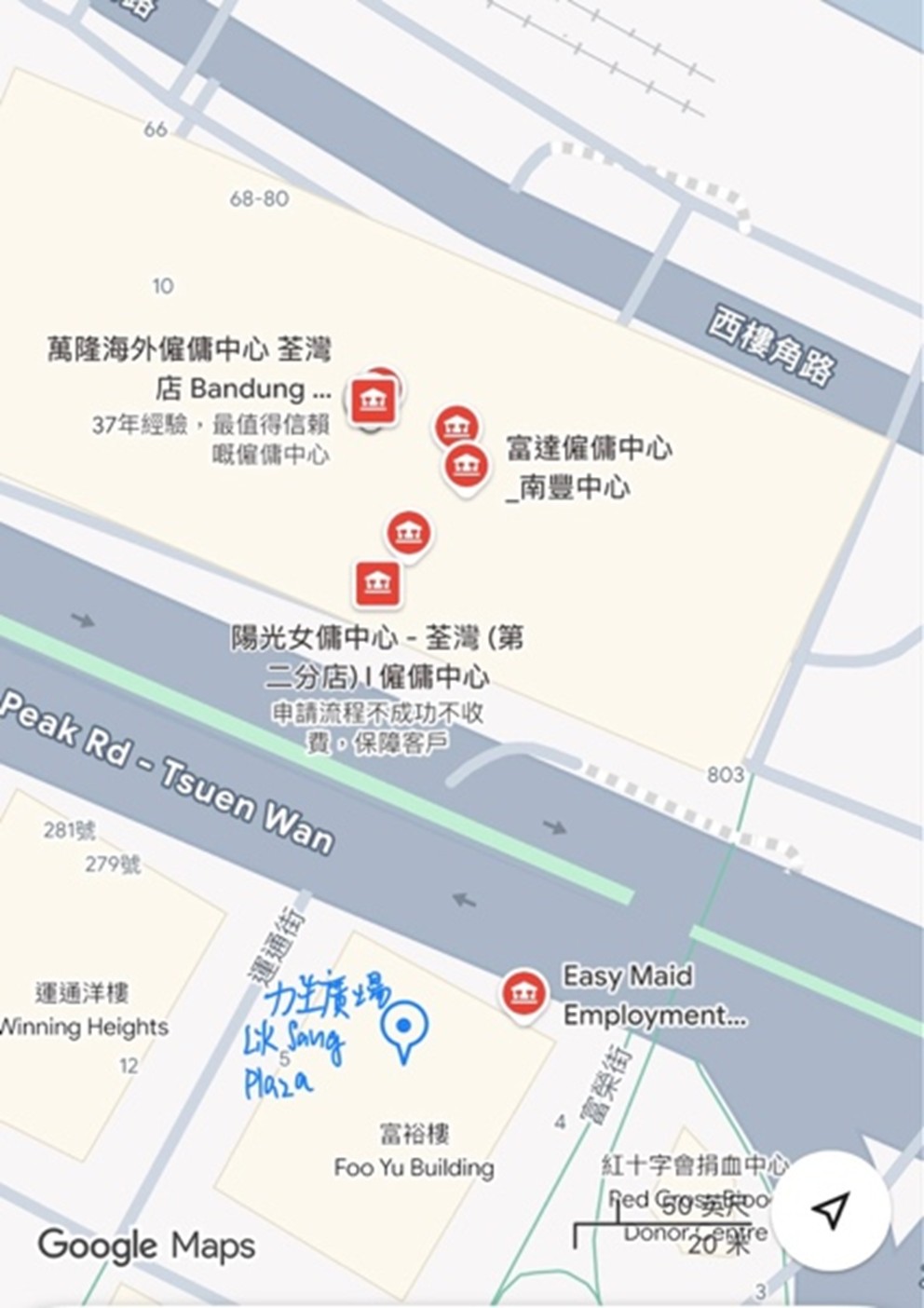
a concentrated and sustained demand for live-in domestic help. This localized
demand is met by a visible clustering of Filipino domestic helper recruitment
agencies in the vicinity, establishing Tsuen Wan as a nodal point for the
community even before their day of rest.
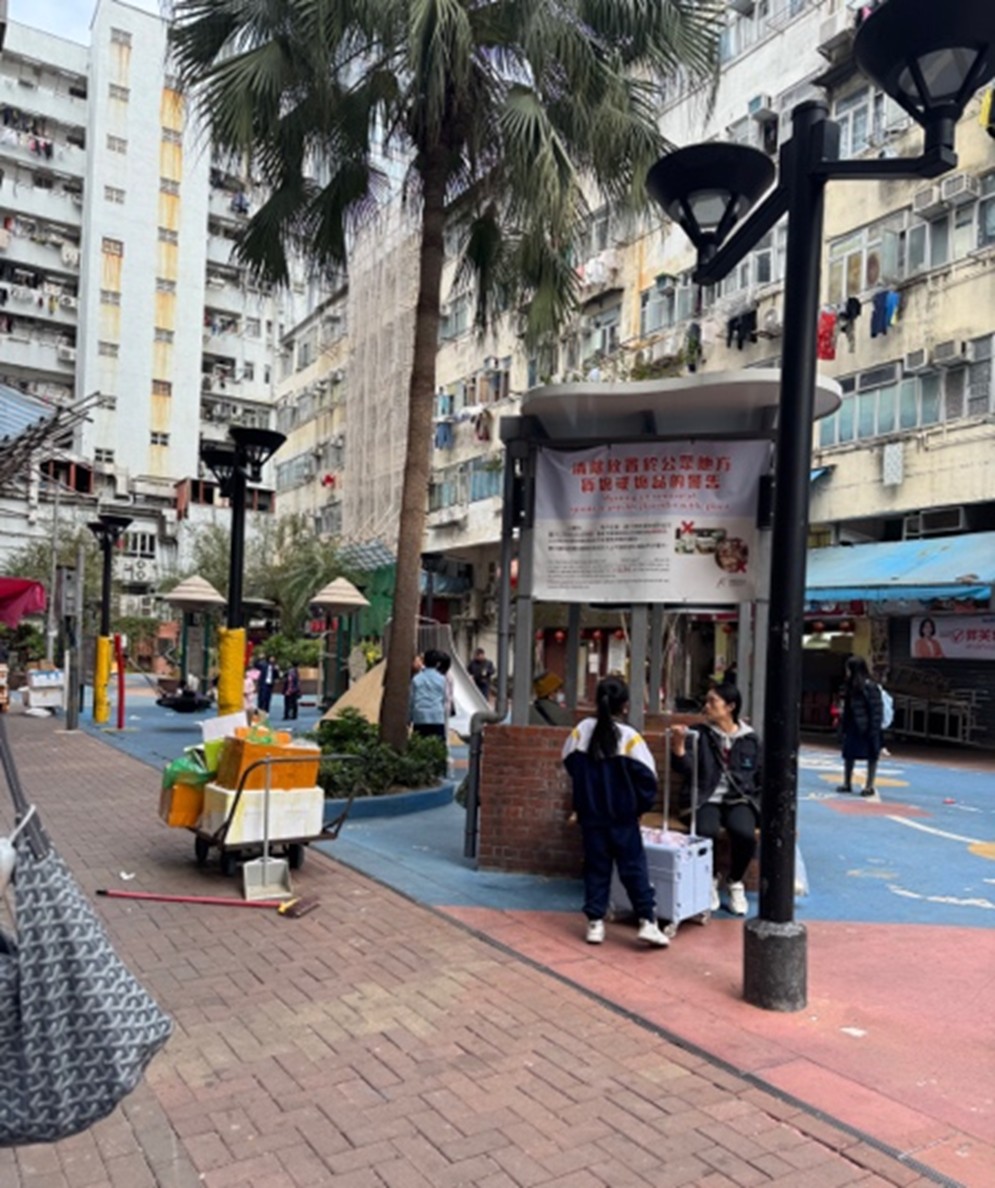
Figure 2: The open space in the Yi Pei Square
(Source: taken by the authors on 20/11/2025)
Lik
Sang Plaza’s specific spatial and economic characteristics make it an ideal
ground for this weekly transformation. Its history is significant; previously
known as a hub for pirated CDs and alternative electronics, the plaza has long
been associated with informal and alternative economies. This legacy laid a
foundational tolerance for non-mainstream commercial activities and a clientele
comfortable with navigating cultural margins. Critically, its location is
strategically marginal. While easily accessible, it is positioned just outside
the prime commercial orbit of the Tsuen Wan MTR station. While large,
corporatized malls like OP Mall and Luk Yeung Galleria dominate the station's
immediate exits, Lik Sang Plaza offers significantly lower rents. This economic
viability is essential for small, community-focused businesses—grocery stores
selling Choc Nut and bagoong (fermented
shrimp paste), or a small café offering halo-halo—that could not
survive in the high-rent districts.
Furthermore, its position at the busy intersection of Tai Ho Road and Castle Peak Road provides excellent accessibility not just for people, but for logistics. This is a crucial enabler for the courier services that specialize in shipping balikbayan boxes, forming a tangible link between the helper in Hong Kong and her family in the Philippines. This powerful combination—a dense local resident-helper population, functional accessibility, and affordable commercial space—creates a self-reinforcing ecosystem that attracts and sustains the large-scale gathering at Lik Sang Plaza.
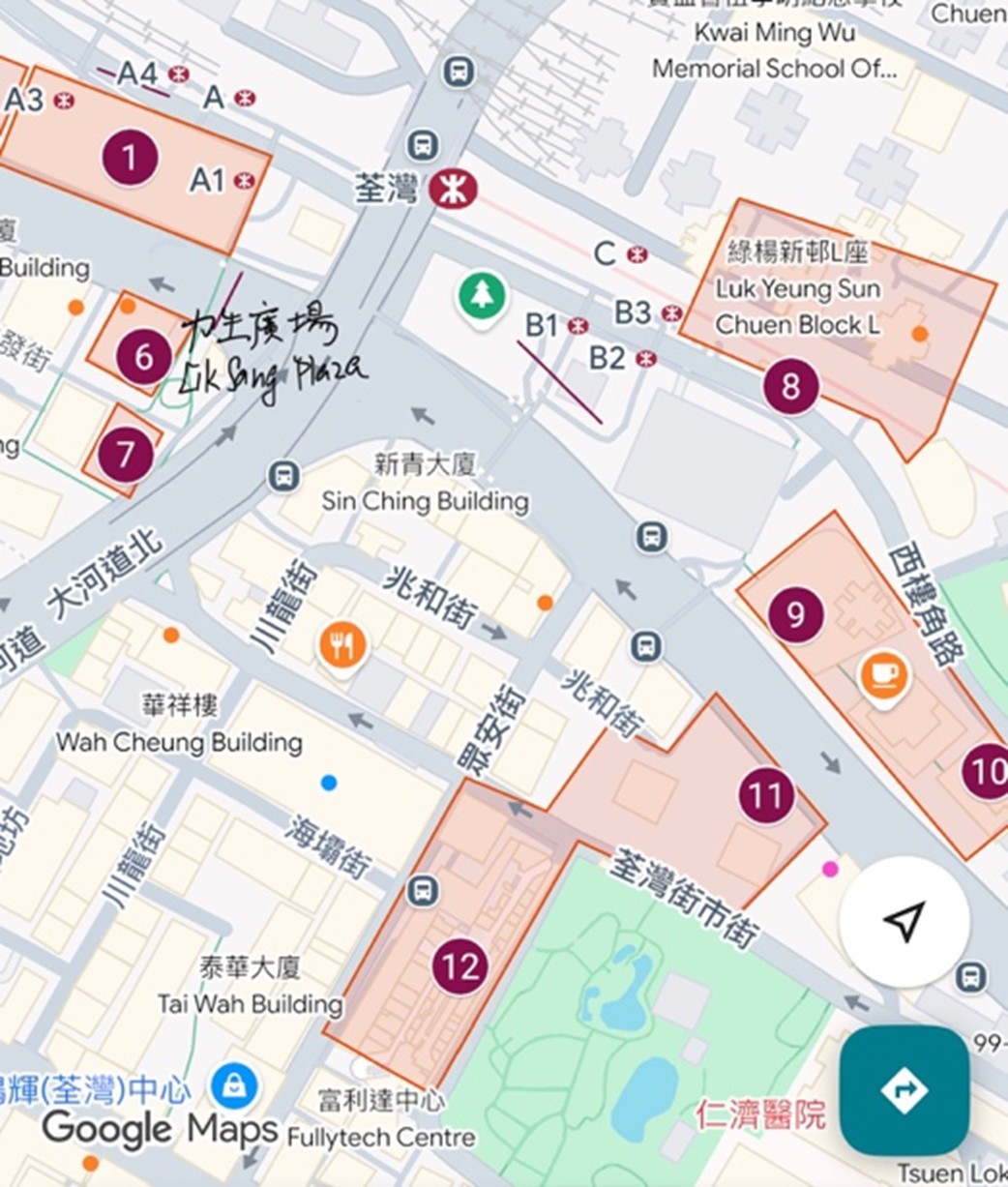
Figure 4: The distribution of Shopping Centers in Tsuen Wan MTR station
(Source: Google Map)
For
Filipino domestic helpers, Sundays at Lik Sang Plaza are more than leisure;
they are a vital act of cultural reaffirmation and psychological decompression.
After a week of work within the constrained and often regulated space of their
employers' homes, they actively reclaim public space to build community and
practice traditions. A key example of this cultural adaptation is the
reinvention of the Kamayan feast—a traditional Filipino
practice of communal eating with one's hands from a spread of food laid on
banana leaves. In the context of Hong Kong, where banana leaves and large-scale
feasting are impractical, the tradition is ingeniously transformed into
communal picnics on cardboard sheets or mats in the open spaces near the plaza.
Through sharing homemade adobo and pancit, taking
group photos and TikTok videos, and speaking in their native tongues, they
forge a powerful community bond. This creates a temporary ethnic enclave, a
"little Manila" that actively mitigates the isolation and alienation
of living abroad.
This
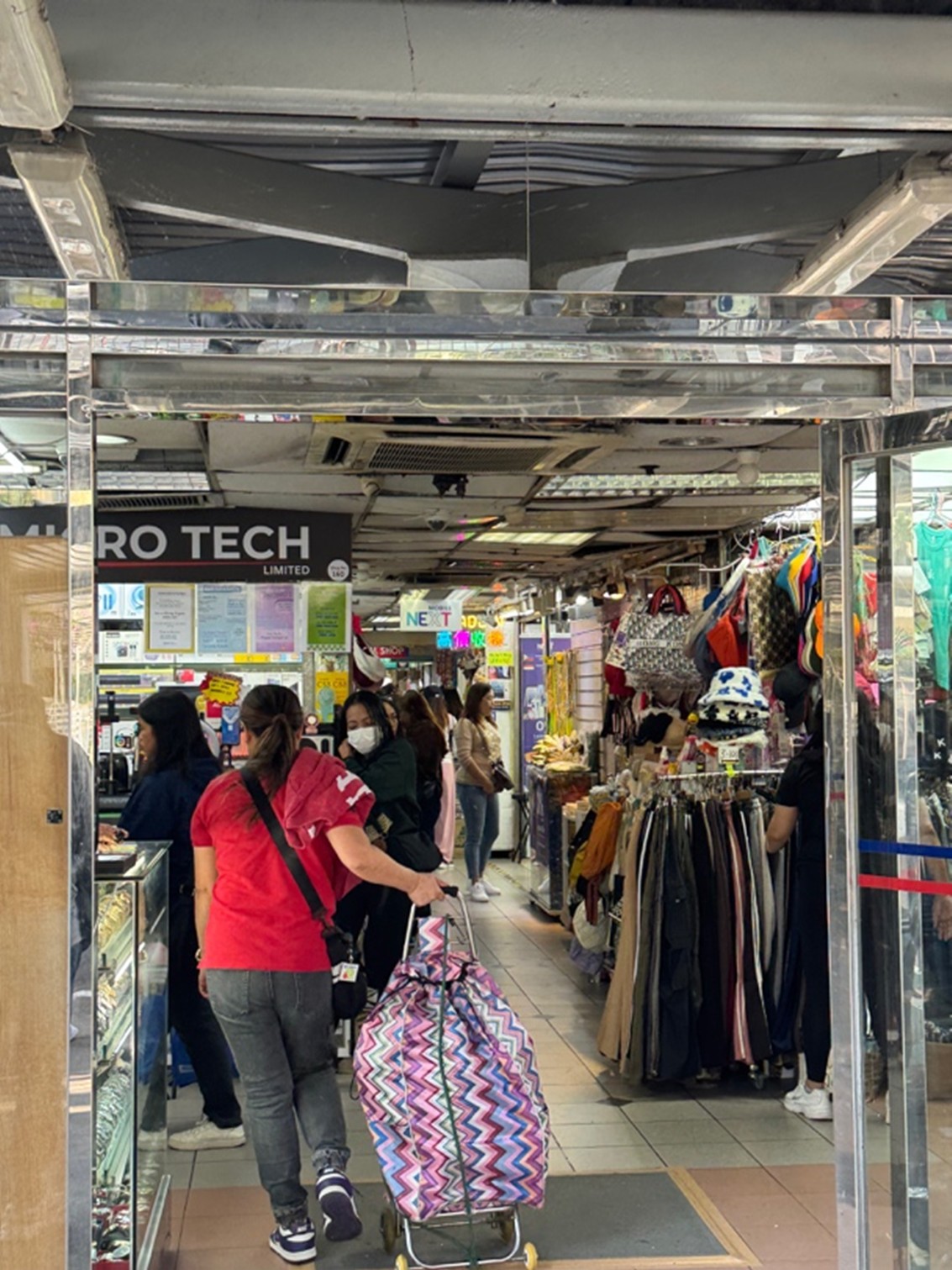
cultural maintenance is intrinsically tied to economic activity. Inside Lik
Sang Plaza, a parallel economy flourishes, catering almost exclusively to their
needs. Remittance centers like Cebuana Lhuillier and LBC are not just shops;
they are sites of ritual where hard-earned wages are transformed into familial
security, ensuring children's education and parents' medical care. Parcel
services are surrounded by helpers meticulously packing balikbayan boxes
filled with clothes, toys, and non-perishable food, a physical manifestation of
love and sacrifice. These activities are profound rituals of care that rebuild
and sustain familial ties across borders, making the plaza a crucial node in
their transnational lives and a space where their identity as breadwinners and
caregivers is honored and enacted.
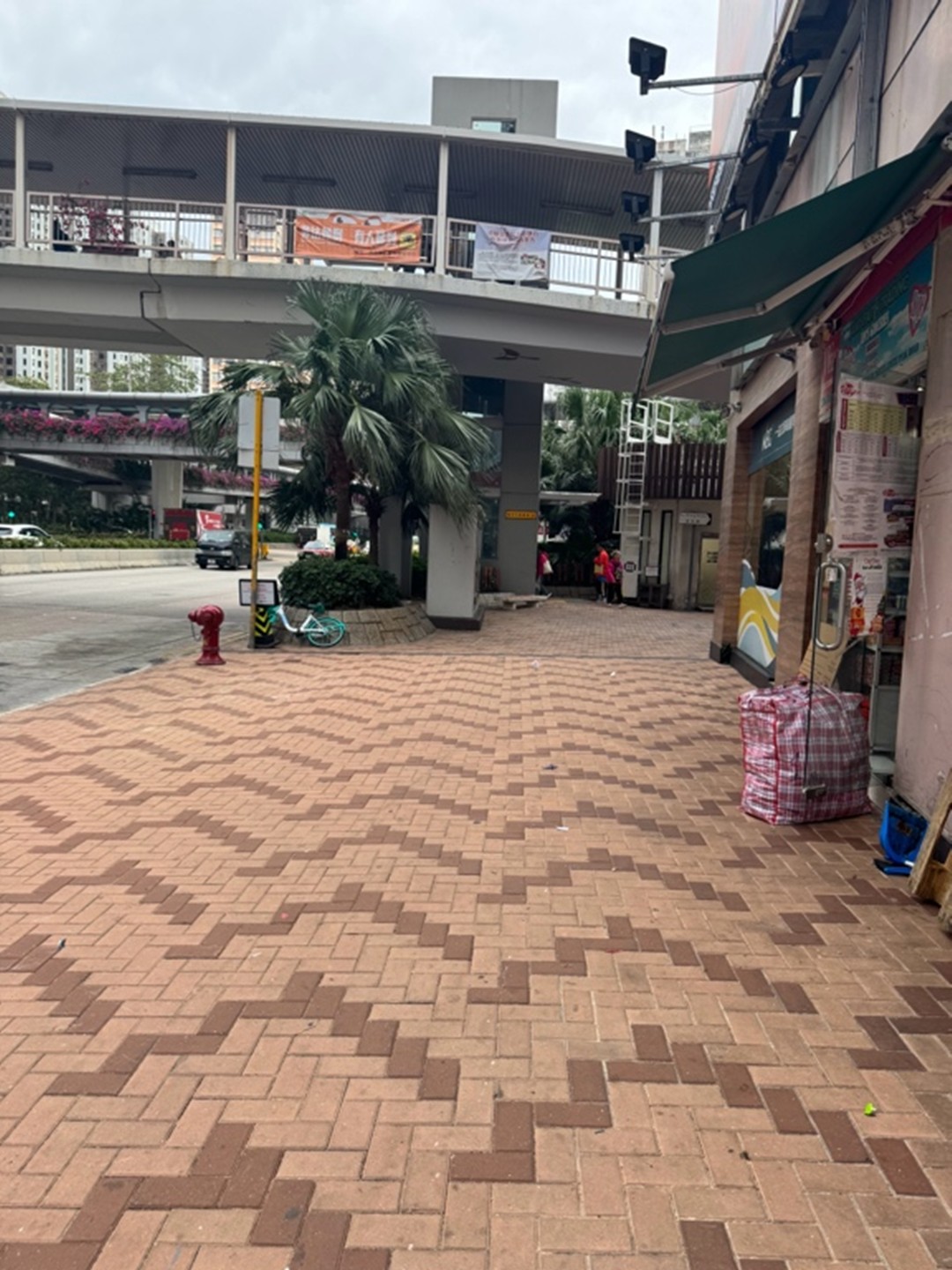
However,
this vibrant creation of a temporary enclave is not without its tensions,
revealing a "struggle for place" that underscores the contested
nature of public space. The very act of spatial appropriation creates friction
with local residents who hold a different conception of the same space. On
weekdays, the area around Lik Sang Plaza functions as a commuter pathway, a
"representations of space" dominated by the swift, purposeful flow of
local pedestrians. On Sundays, this conceived order is disrupted. The same
space is occupied and transformed by large, static gatherings, leading to
tangible tensions over noise levels, physical congestion, and the perceived
right to use and control public space.
Local
residents often perceive this occupation as an infringement, a territorial
challenge that diminishes their power and comfort in their own neighborhood.
This perception fuels a cycle of contention: complaints are lodged with
district councils, and stories are pitched to local media, which often frame
the issue as a problem of obstruction and nuisance. This public discourse, in
turn, pressures authorities like the police and Food and Environmental Hygiene
Department to periodically "reassert control," perhaps by moving
people along or increasing signage. The plaza thus becomes a visible frontier
where the social contract between the transient migrant workforce and the
permanent host community is constantly being tested, negotiated, and redefined.
It is a silent dialogue of presence and resistance, where the act of claiming
space for cultural survival is met with efforts to maintain spatial order.
In
conclusion, Lik Sang Plaza in Tsuen Wan serves as a critical heterotopia for
Filipino domestic helpers—a site of cultural compensation, social reproduction,
and economic resilience within the hyper-capitalist and often impersonal
landscape of Hong Kong. Its specific spatial history, economic viability, and
strategic location enable a marginalized community to actively maintain its
transnational identity through a dynamic interplay of social gathering and
informal commerce. This spatial appropriation, powerfully analyzed through
Lefebvre’s triad, demonstrates how a "lived space" can be produced
from below, challenging the top-down "conceived space" of urban
planners.
Yet, this process inherently involves a continuous struggle for place with local residents, highlighting the complex and often contentious politics of public space in a dense, competitive urban environment. Despite these underlying tensions, a fragile, dynamic balance has emerged over time, reflecting a mutual, if often unspoken, accommodation driven by economic interdependency and the pragmatic realities of shared urban life. Looking forward, this space holds the potential for a more profound and genuine multiculturalism in Tsuen Wan. It is a potential future where Filipino domestic helpers can find a more secure and accepted sense of belonging, and where the local community can come to appreciate, rather than merely tolerate, the dynamic and essential cultural landscape that these migrant workers help create every Sunday.
References
Foucault, Michel. (1984). “Of Other
Spaces, Heterotopias.” Translated from Architecture, Mouvement,
Continuité no. 5: 46-49,
Lefebvre, H. (1991). The production of space. Oxford:
Blackwell.
Manalo, A. B. (2025). Kitchen Kapwa: How Filipino food
literature reveals decolonial Community-Building [MA thesis, University of
St. Thomas]. https://researchonline.stthomas.edu/esploro/outputs/graduate/Kitchen-Kapwa-How-Filipino-Food-Literature/991015325435703691
Nabil, S., & Lee, J. (2018). Filipino migrant workers in Singapore: a case study of Lucky Plaza. www.academia.edu. https://www.academia.edu/36535624/Filipino_Migrant_Workers_in_Singapore_A_Case_Study_of_Lucky_Plaza