


1. Introduction
This project investigates how everyday economic exchanges in Chun Yeung Street in North Point generate a distinctive form of cultural hybridity between Hokkien immigrants and the average Hong Kong resident. We will be investigating the scrutiny of the hybrid linguistic, spatial and commercial order that exceeds the simple differences between Hokkien and Cantonese. The marks of past migration and ongoing contact between these two groups can be traced as it is all recorded in the buildings, shop signs, voices and foods that are found on this street.
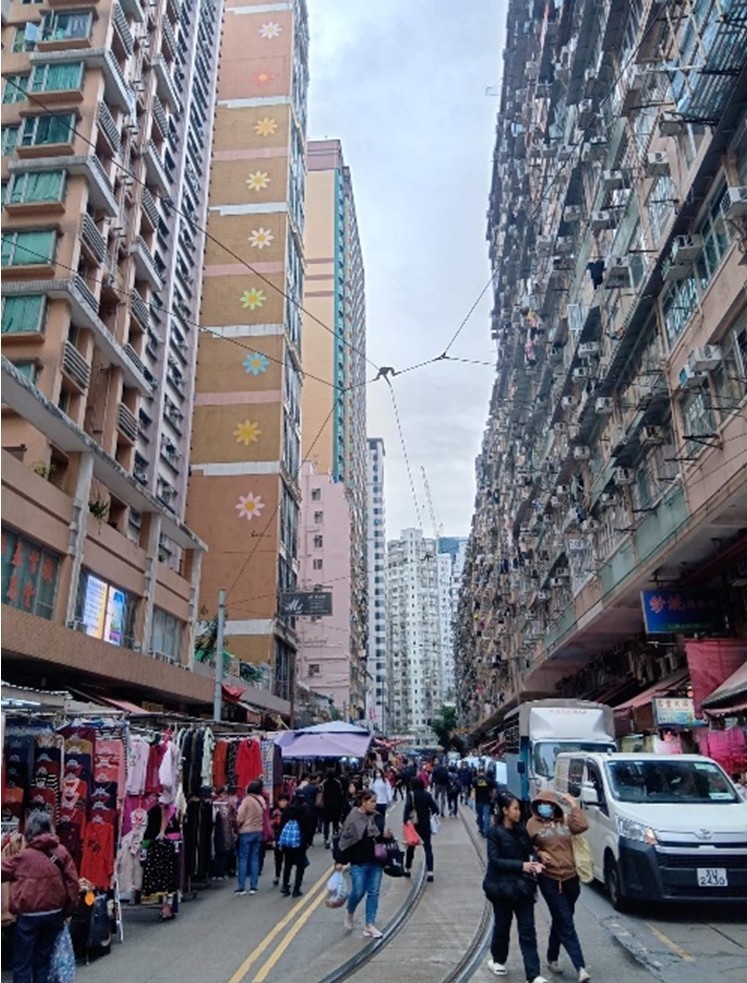
Figure 1 Chung Yeung Street
(Source: Taken by authors on 20/11/2025)
Geographically, Chun Yeung Street is located within a dense, lower income district shaped by small shops and limited public planning, the long standing Hokkien community combined with Minnan values of kinship and hard work created the conditions for frequent and repeated interaction with Hong Kong’s market oriented and Cantonese dominant urban culture.
The
project will draw on the concepts of cultural space and ethnic cultural
geography to analyze the links between place and culture. Chun Yeung Street is
treated as a contact zone where buying and selling is an everyday occurrence.
The multilingual conversations and the local adaptation of Fujian cuisine
connects geographical context with cultural ideas and value systems. Through
decades of routine practices, new hybrid cultural forms are continuously
created and maintained in the daily life of the street.
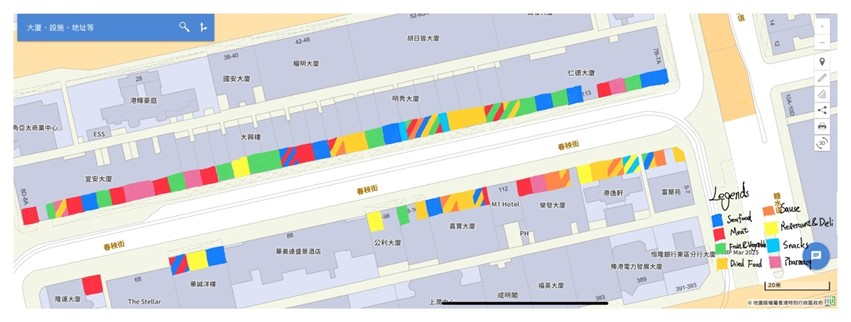
Figure 2 Type of shops on Chun Yeung Street
(Source: Geoinfo Map, 2025; noted by authors on 23/11/2025)
2. Cultural Geographical Perspective in Use
Cultural geography examines how culture and geographical context interact to produce "traces" and cultural landscapes. It focuses on the evolution of culture in space as well as how space constructs cultural identity and interaction.This project will use the following two core concepts: the first is cultural space, where Chun Yeung Street serves as a physical and symbolic arena for cultural interaction. The second is ethnic cultural geography, referring to the spatial clustering of Hokkien immigrants in North Point and the persistence of their culture. This study is based on the cultural hybridization theory by Peter Burke(1937). The core of this theory lies in posits that when different cultures meet in a specific space they do not simply assimilate one another or maintain a pure opposition, instead, they blend to create a new hybrid cultural form with its own vitality.
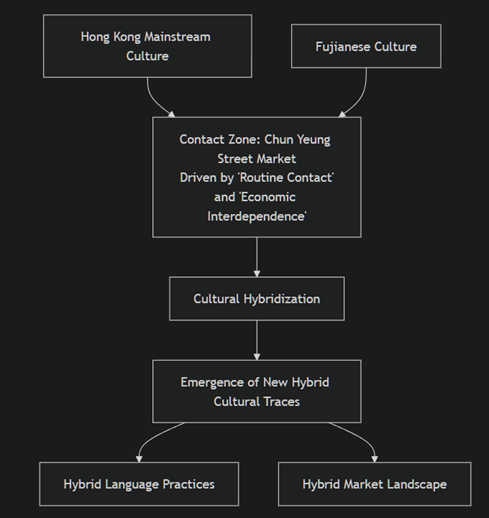
Figure 3 The research stream of the project
The analytical framework is as follows: Chun Yeung Street, rooted in the ethnic cultural geography of the Hokkien community, functions as a cultural contact zone. Through daily interactions and transactional relationships, and driven by the process of cultural hybridity, Hokkien culture and mainstream Hong Kong culture intermix here. This leads to the formation of a unique cultural landscape where both language and commercial practices exhibit distinct hybrid characteristics.
3. Empirical Analysis
The cultural integration phenomenon of Chun Yeung Street is mainly due to its unique geographical environment and cultural interaction. From a geographical perspective, this approximately 200-meter-long neighborhood located between Tong Shui Road and North Point Road in North Point is a microcosm of the about 400,000 Hokkien who are people in the Eastern District, mainly speaking the Hokkien language, who live in Hong Kong. It was developed by Fujian merchant Kwik Djoen Eng in the 1920s and 1930s. Therefore, the street is named by his first name in Cantonese spelling. (Wikipedia Contributors, 2012) The interwoven architectural form of Western-style buildings and high-rise buildings, along with the commercial ecosystem that includes clothing vendors, food shops and Hokkien cuisine restaurants, jointly form a material space that carries cultural interaction and serves as a spatial anchor point for the cultural geography of the Hokkien ethnic group.
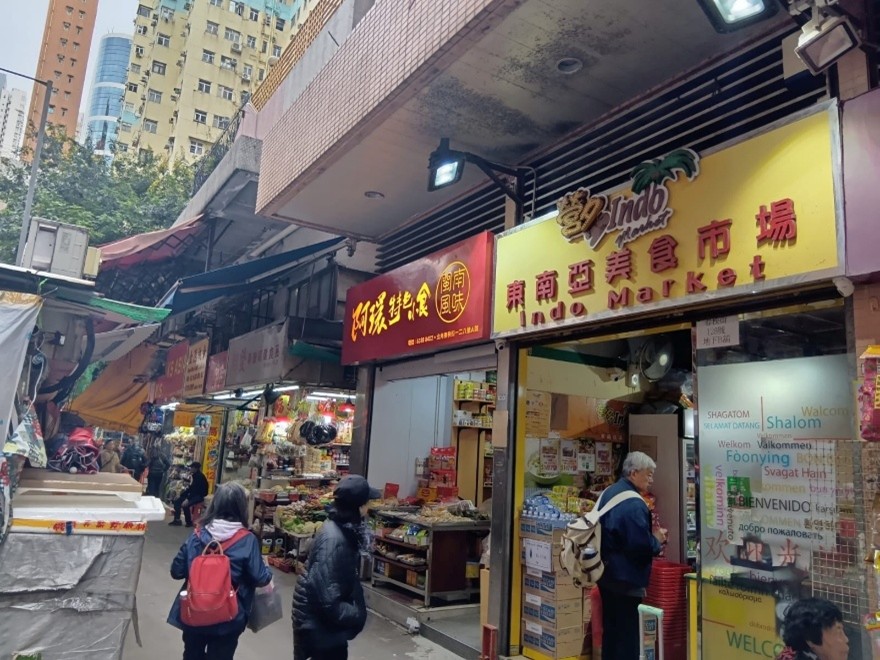
Figure 4 Multi-cultural backgrounded merchants on Chun Yeung Street
(Source: Taken by authors on 20/11/2025)
Our team visited two places run by Hokkien immigrants. Chin Chin Cuisine is a restaurant opened by a Hokkien immigrant (around 60-70 years old), and its dishes are largely similar to those from their homeland. The owner and staff communicate in Hokkien, while customers vary in their language usage. The authors visited the restaurant (November 20, 2025), and communicated in Hokkien. Four other customers were there, two speaking Hokkien, one speaking Cantonese, and one speaking both languages. The Cantonese speaker was the loudest and dominated the conversation. The authors also visited Bao Dim Tat Yan, where the owner and staff were younger (around 40-50 years old). They mainly use Cantonese, but can also use Hokkien. We also noted other shops and stalls selling Hokkien snacks on the street.
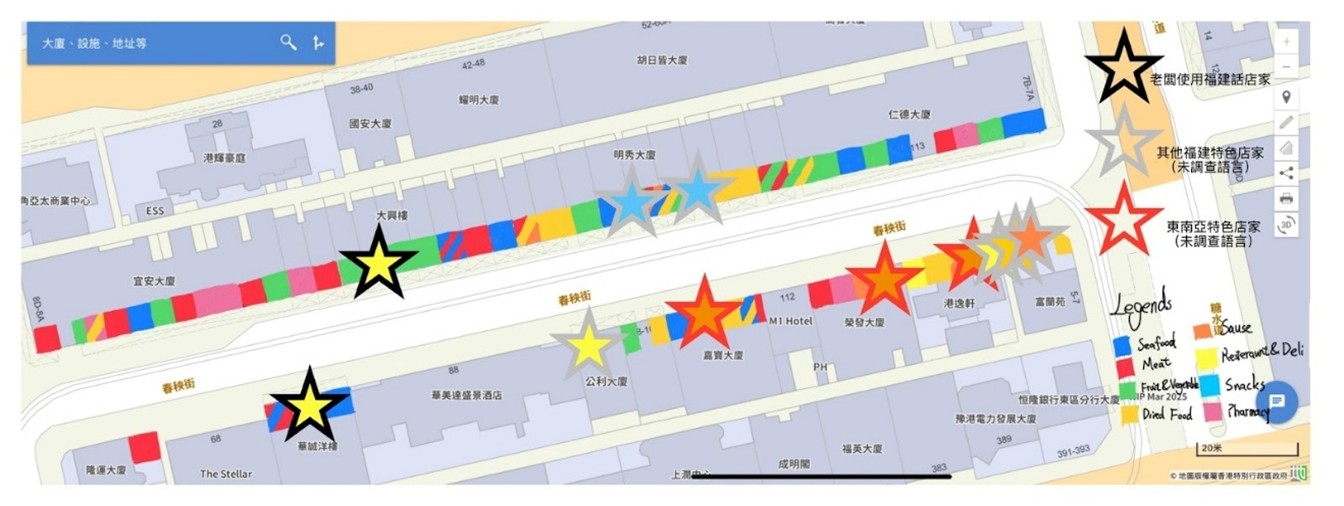
Figure 5 Language and cultural backgrounds of shops on Chun Yeung Street
(Source: Geoinfo Map, 2025; noted by authors on 23/11/2025)
In terms of cultural exchange, the interaction between the Southern Min language (Hokkien language) culture and the Cantonese culture of Hong Kong is a core factor. Immigrants from southern Fujian mostly use Hokkien, also known as Southern Min dialect, which is widely spoken in southern Fujian such as Quanzhou, Zhangzhou, Xiamen, as well as in Taiwan, Malaysia, Singapore, Indonesia and other places. In ecological research of the Southern Min dialect in Hong Kong by Xu Yuhang (2020), the Hokkien language in Hong Kong has undergone a great many special variations through long-term contact and interaction with Cantonese immigrants. Meanwhile, the restaurants and markets in Chun Yeung Street, as cultural contact areas, have become the medium for the interaction between Hokkien culture and Hong Kong culture in this environment. Trams also play an important role in the local community (Hong Kong Tourism Board, 2025), which indicates the dominant impact of Hong Kong Culture to residents.
This interaction between geographical context and culture has given rise to cultural hybridization through daily contact and economic interdependence mechanisms. Hokkien old merchants, the younger generation of Hokkien, Cantonese and consumers from other ethnic groups all participated together. In daily interactions, the older generation of merchants still use the mutated Southern Min dialect when running their shops, while younger customers or those of non-Fujian descent respond in Cantonese or Mandarin. The coexistence of the three languages on Chun Yeung street at present is the "trace" of cultural contact. As a result, the Hokkien spoken by Hokkien people in Hong Kong often bears Cantonese influences and differs from the language spoken by Hokkien people in their ancestral homeland (Xu, 2020). Many syllables are pronounced differently from those in their native region. Under the economic interdependence, Hokkien characteristic shops rely on the consumption demands of diverse ethnic groups to survive, and consumers also depend on these shops to obtain cultural products such as Minnan ingredients and Fujian cuisine. For instance, Hokkien cuisine restaurants will retain the core flavor of southern Fujian while making minor adjustments to the taste of their dishes to suit local diners, thus creating a hybrid of food cultures.
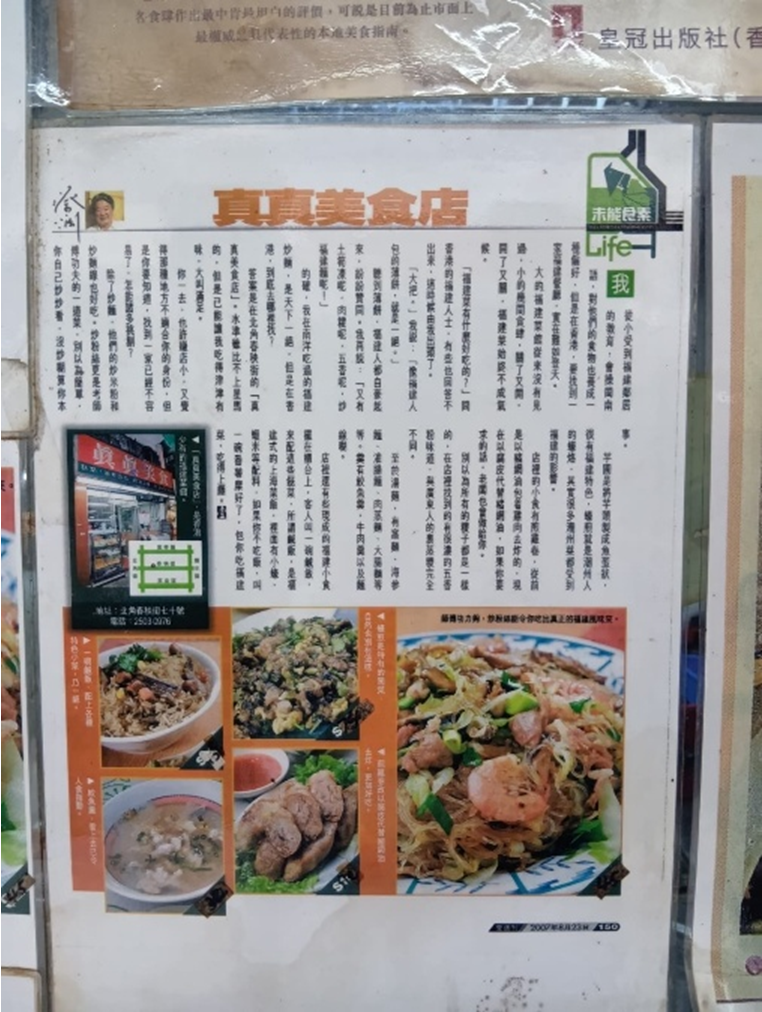
Figure 7 Introduction of Chin Chin Cuisine
(Source: Taken by authors on 20/11/2025)
The most impactful language to Hokkien, Cantonese, has dominated Hong Kong society since the establishment of Hong Kong's education system. Then, the languages of schools have been limited to English and Cantonese (Ding, 2013). During the movement to make Chinese the official language, Chinese became the official language of Hong Kong, Cantonese gained official recognition, while Hokkien did not receive enough attention and was gradually replaced by Cantonese (Ding, 2013; Ho, 2024). Hokkien characteristics were also incorporated into Cantonese, becoming one of the origins of the lazy pronunciation phenomenon (Ding, 2013).
The unique Hokkien culture of Hong Kong is also facing the challenge of being difficult to pass on. Cantonese, as the dominant language in Hong Kong, holds a dominant position in interactions. The variation and retreat of the Southern Min dialect essentially reflect the compromises made by Hokkien immigrants to adapt to mainstream society. Some linguists like Xu Yuhang believe that this imbalance in language power is manifested in the weakened understanding of the Southern Min dialect among the younger generation, which is a difficulty in the inheritance of Minnan culture (2020). Chun Yeung Street has gradually developed from a single space for Hokkien ethnic culture into a place for the exchange of diverse cultures. Its business form and cultural expression have become a model of Hong Kong's multiculturalism, and also reflect the transformation of the ethnic culture of immigrant cities from marginal to integrated.
4. Conclusion
In conclusion, Chun Yeung Street mixes Shanghai and Hokkien Culture into Hong Kong local culture. It illustrates a path of integration where cultural identity is not eliminated and transformed through negotiation and mutual adaptation. But it has encountered some problems in cultural inheritance. We use the local cultural space and ethnic cultural geography as the traces to research the history and culture of Chun Yeung Street. To enhance the cultural influence of Chun Yeung Street in Hong Kong, the government could support local cross-language transmission to resolve the problems. For example, the government may fund community-based Hokkien and Shanghai dialect programs to protect the local Minnan culture and release some advertisements of Chun Yeung Street to make more people notice and get involved in the unique colorful hybrid culture.
References
Ding, P.
S. (2013). Hong Kong as a Laboratory for Language, Nationalities
Research in Qinghai, 24(4), http://doi.wanfangdata.com.cn/10.3969%2fj.issn.1005-5681.2013.04.030
Ho, J. C.
(2024). Hong Kong Anti-colonial Nationalism during the Chinese Language
Campaign. The China Quarterly, 258, 384–399. https://doi.org/10.1017/S0305741023001534
Hong Kong
Tourism Board. (2025). Chun Yeung Street (Wet Market). https://www.discoverhongkong.com/eng/interactive-map/chun-yeung-street-wet-market.html
Peter, B.
(1937). Cultural Hybridity. Polity Press. https://archive.org/details/culturalhybridit0000burk
The
Government of the Hong Kong SAR (2025). Geoinfo Map. The Government of the Hong
Kong SAR.
Wikipedia
Contributors. (2012, August 3). 春秧街. Wikipedia.org; Wikimedia
Foundation, Inc. https://zh.wikipedia.org/wiki/%E6%98%A5%E7%A7%A7%E8%A1%97
Xu, Y. (2020). 香港閩南方言生態研究. Chung Hwa Book Company (Hong Kong) Limited, Hong Kong. https://library.hkbu.edu.hk/record/?ID=alma991026359044103409&T=L